
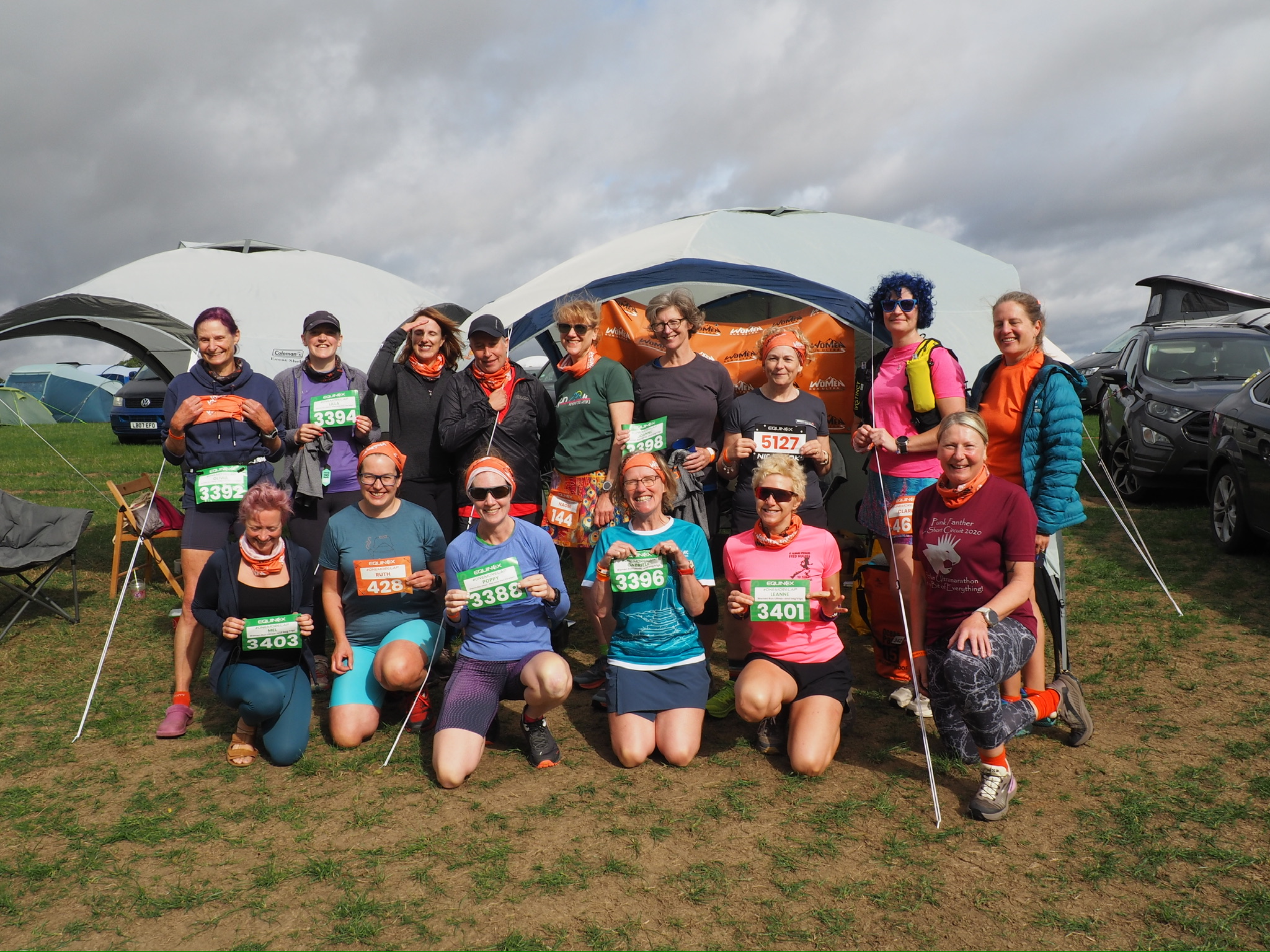
Welcome to the first issue of the women run ultras monthly newsletter!
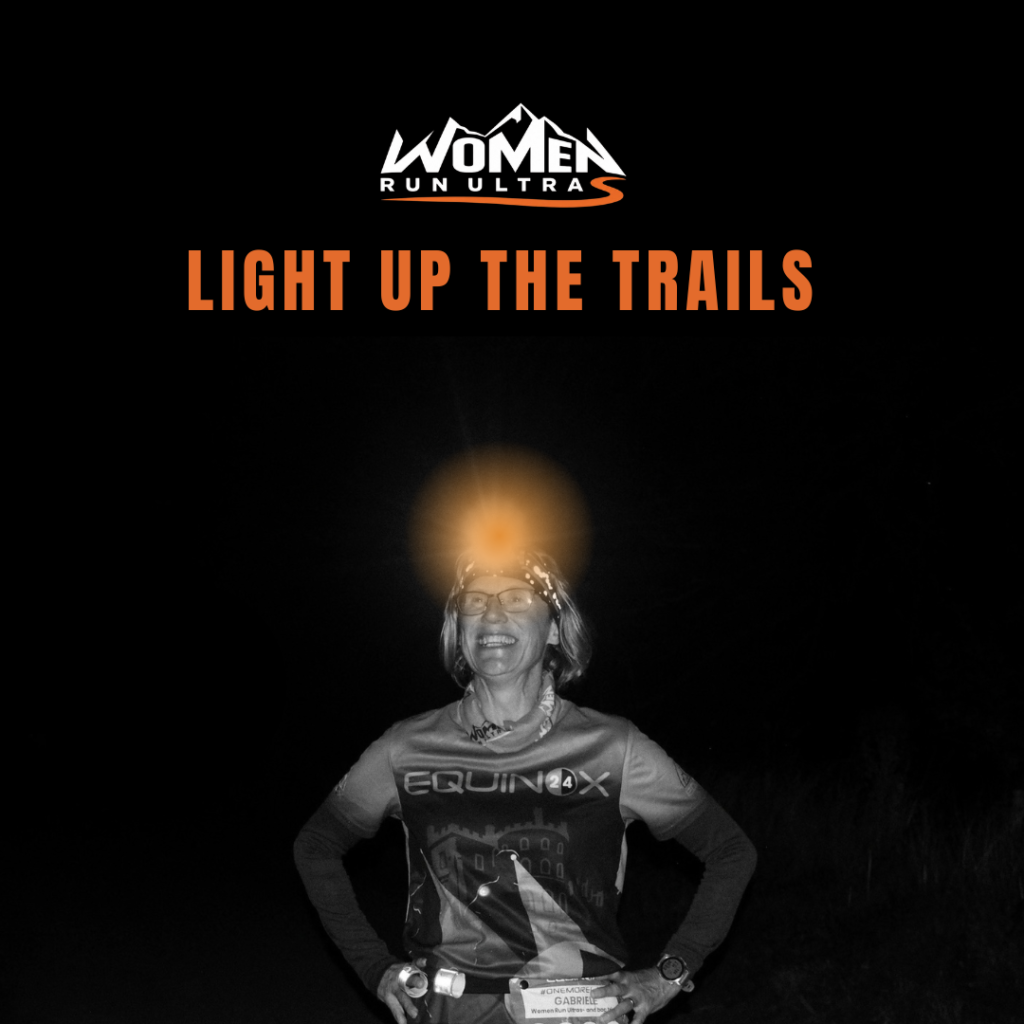
Light Up the trails
Women Run Ultras are proud to announce the inaugural ‘Light Up the Trails’ campaign.
The dark has an undeniably detrimental effect on women’s running and we are encouraging our community to stem this in group fashion.
We are looking for women across the UK to lead free and social 5km/5 mile runs in the final week of October, where we want our women to ‘Light Up the Trails’.
Get in contact via our Instagram (@womenrunultras) or drop us an email at womenrunultras@outlook.com to organise your run.
We value all voices and are looking to collaborate with as many runners as possible to spread our word.
Runs have already been confirmed to take place in Northampton, Cardiff, Munich and Scotland.
A 2023 study by Adidas found that 92% of women are concerned for their safety when they go for a run, with 51% afraid of being physically attacked in comparison to 28% of male runners.
Data commissioned by ThisGirlCan revealed that almost three-quarters (72%) of women change their routines regarding outdoor exercise during winter.
We want to encourage women to pick up their headtorches and draw on the amazing community we’ve built to keep on moving over the colder months.
How is the Spine different from the tour des geants? A word from anna troup
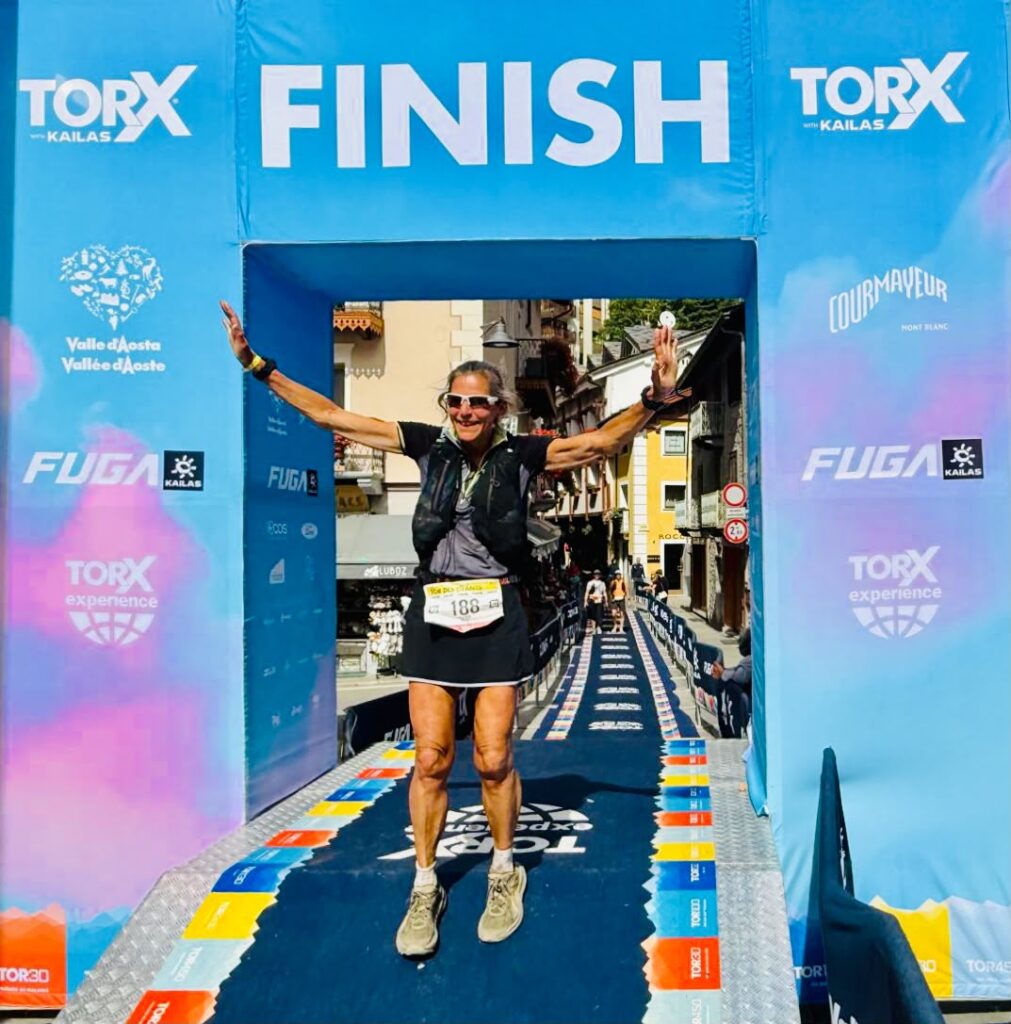
After recently completing the gruelling TDG race in September, our founder offered a look at the differences between it and Britain’s most brutal.
Two of the bucket list races in Europe that people will suggest are always the Spine or Tor des Geants.
Are they similar? Does one prepare you for the other? Are you ready for either? What should you be thinking about before signing up?
Seasonal context
The Spine is in January or June. Summer or winter.
There’s often little to choose between them but generally a Winter Spine will be colder, wetter and potentially mix in snow and ice and high winds too. Summer can be very hot, cold, wet and windy and anything in between.
The TDG is in the Italian Alps in early September. It’s high peaks and low valleys so you can have very large temperature differences every few hours.
It is deliberately held at a time when there is less chance of snow on the tops BUT the race has been shortened and called off more than once due to snow and crampons are mandatory kit.
Realistically you can do a Spine Race and still have a summer of racing if that’s what you want; Spine and UTMB would still work well.
Some try to do UTMB back to back with TDG but it’s unwise at best and unlikely to mean your best race at TDG.
Altitude
If you live in the UK or the flatter areas of Europe you will need to try and acclimatise.
It goes over 3000m on a number of occasions and stays above 2500m for extended periods of time.
The Spine on the other hand will require no acclimatisation, other than to inclement British weather.
For TDG this really means getting out there before the race to recce and breathe the thin air, if you can.
If you can’t, expect to feel pretty awful in the first 24-48 hours unless you are naturally good at altitude.
navigation
The Spine is not marked other than by rather inconsistent Pennine Way route markers, but you are provided with an excellent GPX.
If you’re good at following your watch navigation whilst occasionally a challenge is manageable, although finding some of the exits from some of the fields is tricky and recces do make a difference.
TDG is fully flagged and way marked. The GPX is definitely not excellent, but the flags render it almost unnecessary. Almost, because sometimes the cows eat the flags!
The hardest part of the Tor is navigating through towns, but the organisation does a very good job of marking the route on the ground.
Aid stations/support
The Spine only has 5 official aid stations. In Winter there are more unofficial but authorised stops and, of course, there are Spine Angels who “volunteer”.
This means that competitors need to be self-sufficient for 10-20 hours at a time. There is no support or crewing in the Spine outside of the official race aid stations or safety teams.
TDG has refuges or refreshment points or life bases every 10-12km (sometimes less), but the terrain means they are 3-5 hours apart for most competitors. However, crew is permitted at almost every checkpoint.
Spine Racers are allowed to enter public spaces (e.g. shops and pubs) and buy food and drink. TDG racers are allowed to purchase food and drink in the refuges the race visits if they are open.
mandatory kit
The mandatory kit for the Spine is the stuff of legend and the reality is your pack will be at least 5-7kg.
You are equipped to be safe in all conditions if you were to find yourself unable to move due to an accident or if you need to sleep between aid stations.
TDG has an almost non-existent mandatory kit list. This means that top runners are crewed at almost every checkpoint and their packs weigh virtually nothing as a result.
TDG runners do not have to have a drop bag and are permitted to totally rely on crew support.
Those without crew support have drop bags that appear at the 7 life bases. Those bags need to contain the potential mandatory kit you might be required to carry if the weather turns e.g. crampons.
terrain
To compare the two, the Spine is longer; 268 miles to 220, but its 12,000m of vertical pales against TDG’s whopping 26,000m.
The Spine’s cutoff is 156 hours (equivalent to six-and-a-half days), with TDG’s at 150 (six days and six hours).
Those who have done both tend to finish both in roughly the same amount of time – in a bad weather year the Winter Spine is roughly equivalent to TDG.
A Summer Spine tends to be slightly quicker, despite the pack weight. The Spine is generally wet underfoot and there are bogs, but there are no edges. It’s very hard to “fall off” the Spine other than a short scramble up Pen y Ghent and the more difficult line up Cauldron Snout.
There are lots of limestone slabs that can be slippery or under water and you might injure yourself falling because it’s icy or snowy but you’re not likely to fall off an edge (unless you get very lost on High Cup Nick).
TDG on the other hand is very rocky in the high mountain areas. You have to navigate boulders, scree, exposed single track, there are roped areas, there are areas with fixed ladders. There are plenty of edges. The descents are steep, the ascents are very steep and it is definitely “technical”.
Equinox 24 success
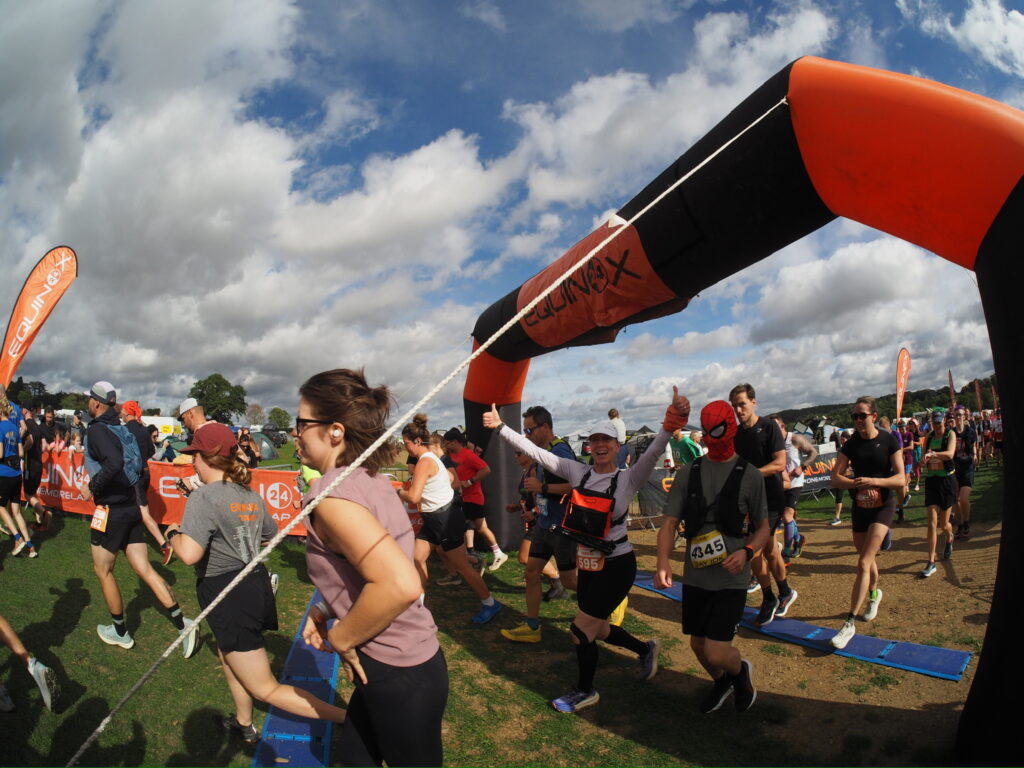
There is only one word to describe the Women Run Ultras community coming together at the recent Equinox24: joyous.
Women Run Ultras arrived in force at Equinox, fielding two teams, a couple of dozen solo runners, 10 km runners, spectators and a pack of trail hounds.
Tents were pitched, vans and campers were parked up, and a group of women who had previously only known each other through a Whats App group, met for real.
People stepped out of the shadow of social media and forged real connections. And what a weekend we all had.
Equinox24 is a trail running festival held annually over the weekend of the September Equinox in the grounds of Belvoir Castle, Leicestershire.
The aim is to run as many laps as possible between noon on Saturday, when 1500+ runners line up, until noon on Sunday.
Runners participate in Teams, solo, and in pairs and run as much or as little as they want on a looped 10km mixed terrain course that packs a bit of an elevation punch (THAT Hill, anyone?).
Racing does not stop for 24 hours, so Equinox offers a perfect opportunity for ultrarunners in training to practise running at night, to manage lack of sleep and to work on fuelling strategies.
24 hours can take a hefty toll on feet, knees, and mind, but at Equinox24, nobody is ever alone out on the course and nobody is ever last.
It’s an ideal event to work on essential trail skills, especially when other women have your back.
Women Run Ultras set up a support base right at the side of the course where for 24 hours there was always someone awake, someone able to crew, and we never run out of hot water.
And we all learned new words (ultracrepidation, anyone?). And women run further than they had ever run before, faced the night, battled sleep monsters, and nobody was alone.
The weekend started on Friday night with a Beer Mile run, there was Belvoir Castle Parkrun on Saturday morning, and the running kicked off for real at 12 noon.
Over that one weekend, Women Run Ultras clocked up a total of 2506 km, aka 250 x 10 km laps, ranging from Claire ‘Butterfly’ Grubb’s 19 solo laps that secured her a 2nd place on the women’s podium to those completing the one lap needed to qualify for a medal.
This wasn’t about the running, this was about building community. And Equinox delivered.
So much so, that it has already been agreed to return next September.
Equinox 24 Blooper reel
We sent Gaby out for her first attempt at making content.
Unfortunately, her technical prowess left much to be desired.
While on the day the press team left the footage on the cutting room floor, overwhelming demand has lead to the first ever Women Run Ultras blooper reel…
Discount codes
All of our discount codes are exclusively provided through our newsletters. SIgn Up for next month’s here so you don’t miss out.
Leave a Reply